September 2026 – April 2027
Odyssey
Selections from the Morris Museum’s Collections of
Eastern Mediterranean Antiquities
Odyssey
Selections from the Morris Museum’s Collections of
Eastern Mediterranean Antiquities
The objects presented here, part of more than 100 ancient Mediterranean objects in the collection (dating as early as 2000 B.C.), offer a glimpse into the artistic traditions and cultural exchange that linked the ancient Mediterranean world. Greek artists developed influential approaches to mythology, storytelling, and the representation of the human figure. As Roman culture expanded across the region, Roman artists adapted and reinterpreted many of these ideas, helping to preserve and transmit them to later generations.
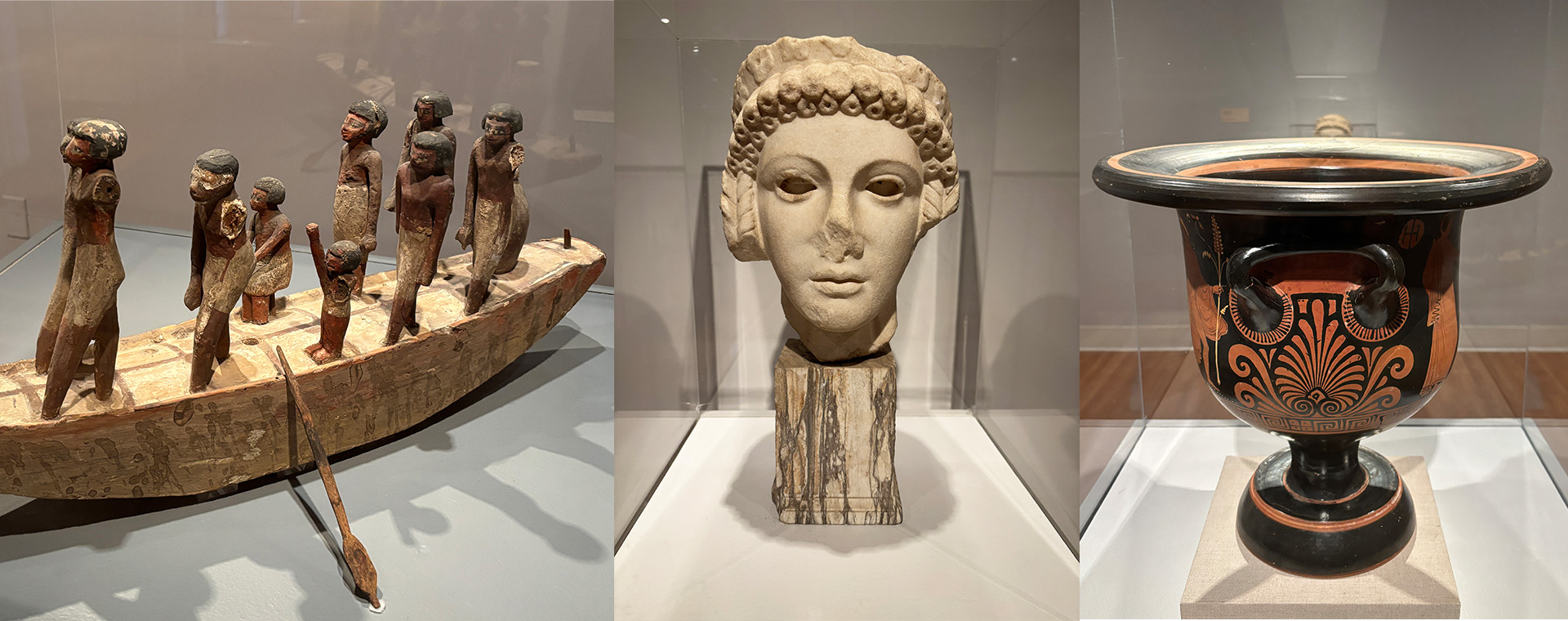
An Apulian Bell Krater, made in southern Italy, 400-300 B.C., reflects the strong influence of Greek culture in the region. Used for mixing wine and water at communal gatherings, vessels like this were often decorated with scenes drawn from mythology and everyday life. Although produced in Italy, its form and painted imagery demonstrate the lasting impact of Greek artistic traditions.
A Hellenistic Head, dating to approximately 200 B.C., illustrates the Hellenistic period’s interest in conveying human emotion and naturalistic features. Artists of this era sought to create more expressive and lifelike representations, an approach that would influence Roman art and, centuries later, Western artistic traditions.
Together with additional antiquities from the Morris Museum Collection, including works acquired from institutions such as the Cleveland Museum of Art and the New Jersey Museum of Archaeology, these objects reveal how ideas, images, and artistic practices traveled across cultures and continue to inform our understanding of the ancient world.


We are happy to help you with any events you would like to have with us!
We are happy to have you join us and look forward to seeing you in person!